Threads of Coexistence
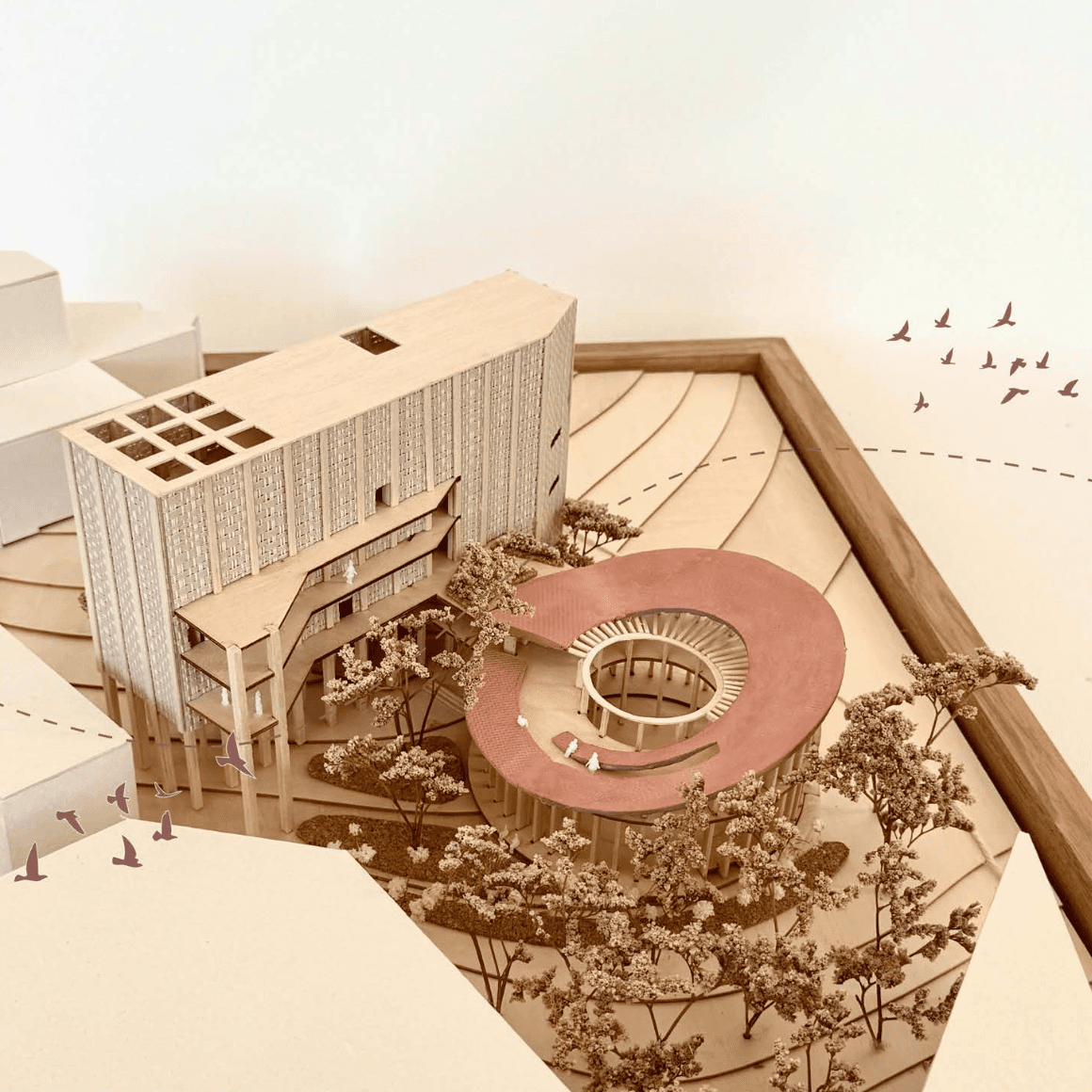
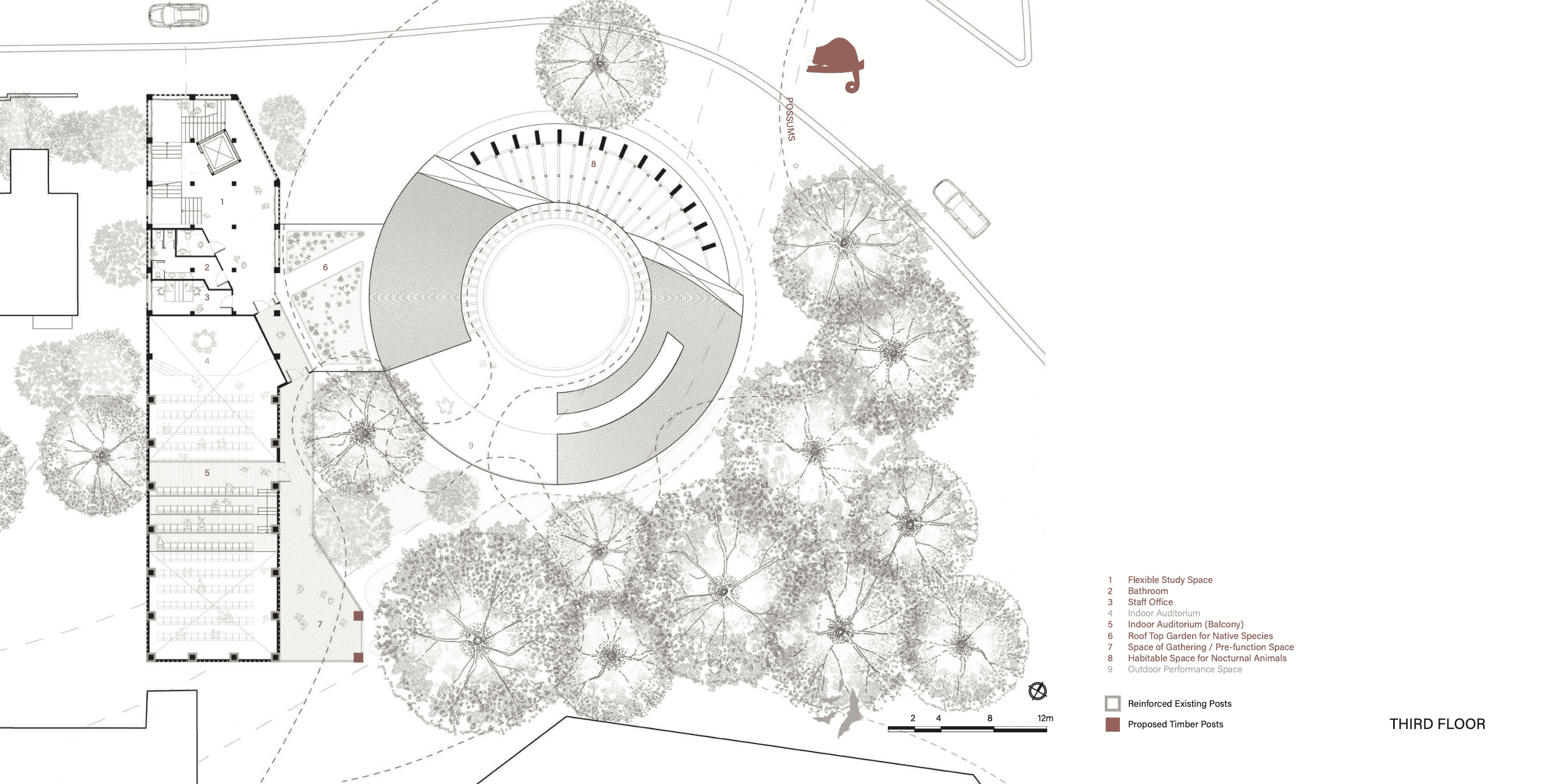
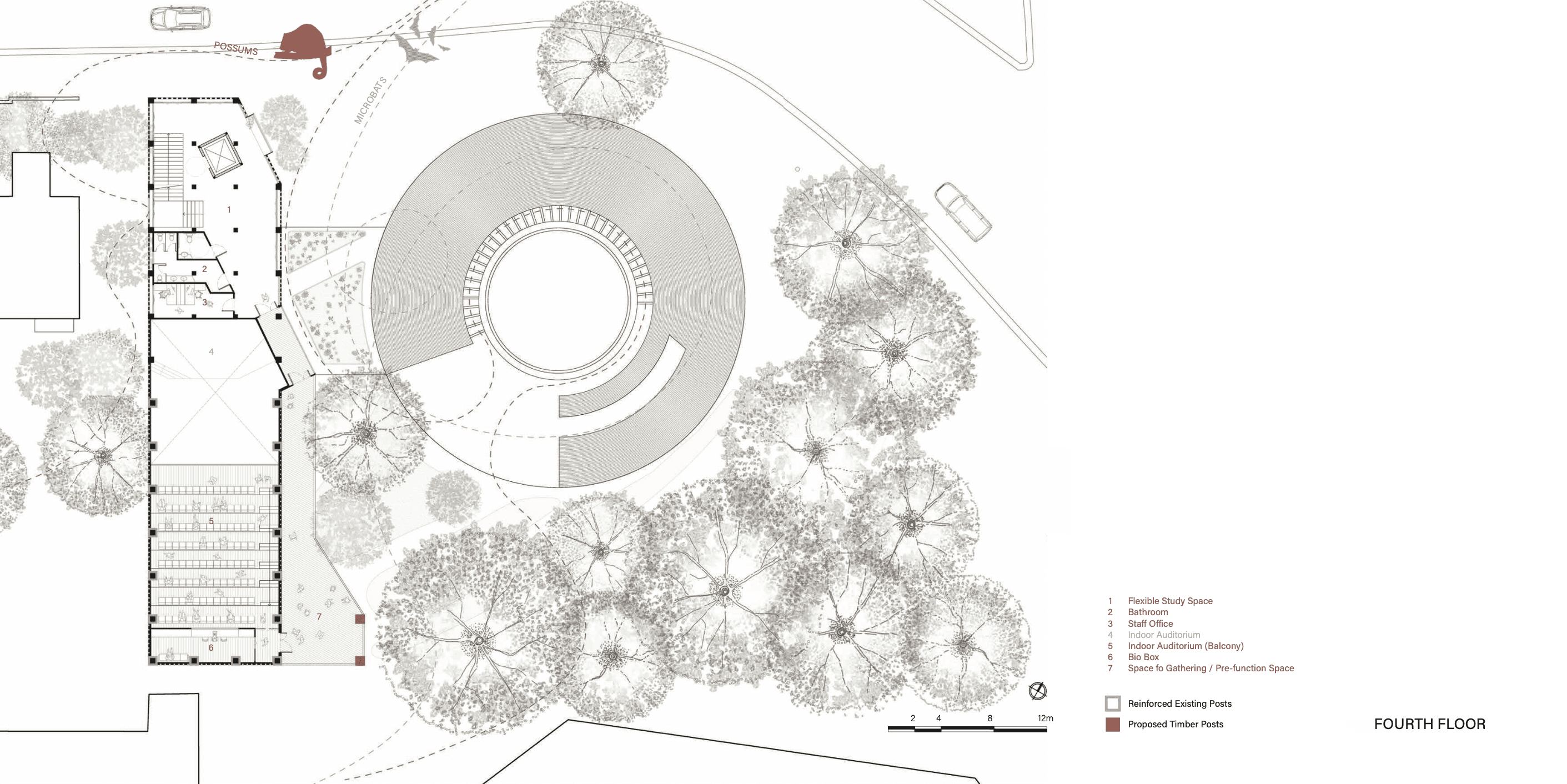
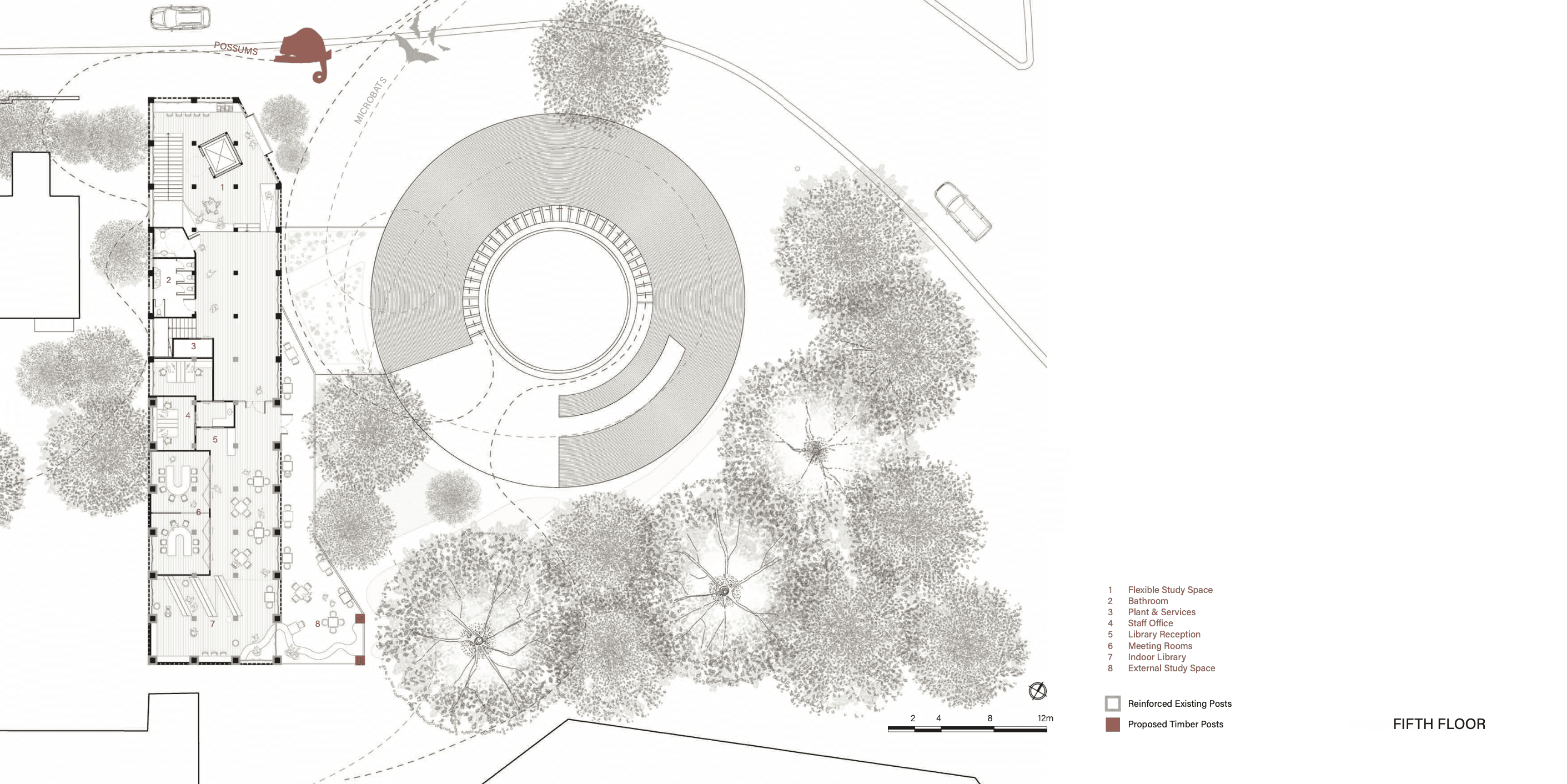
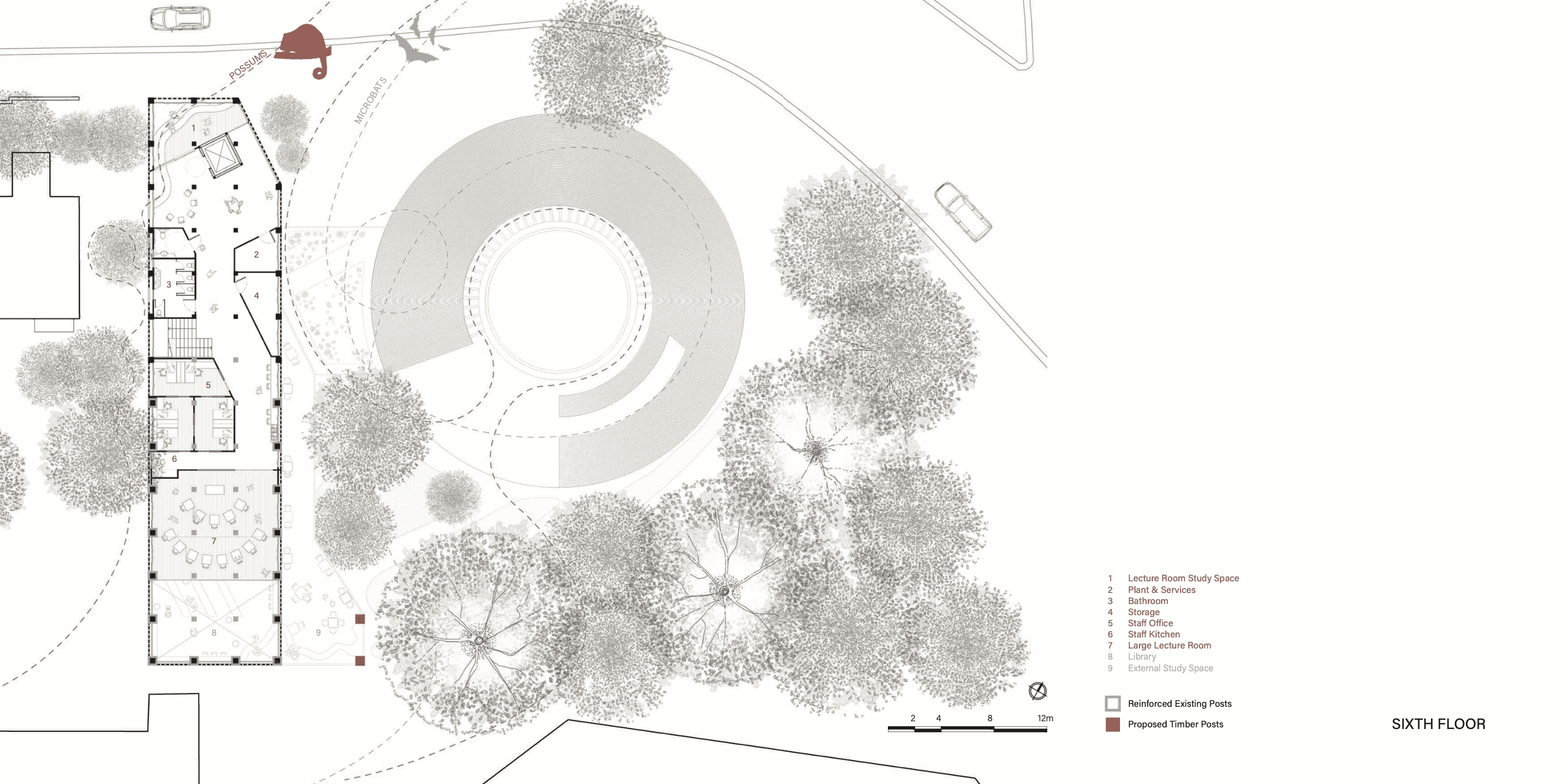
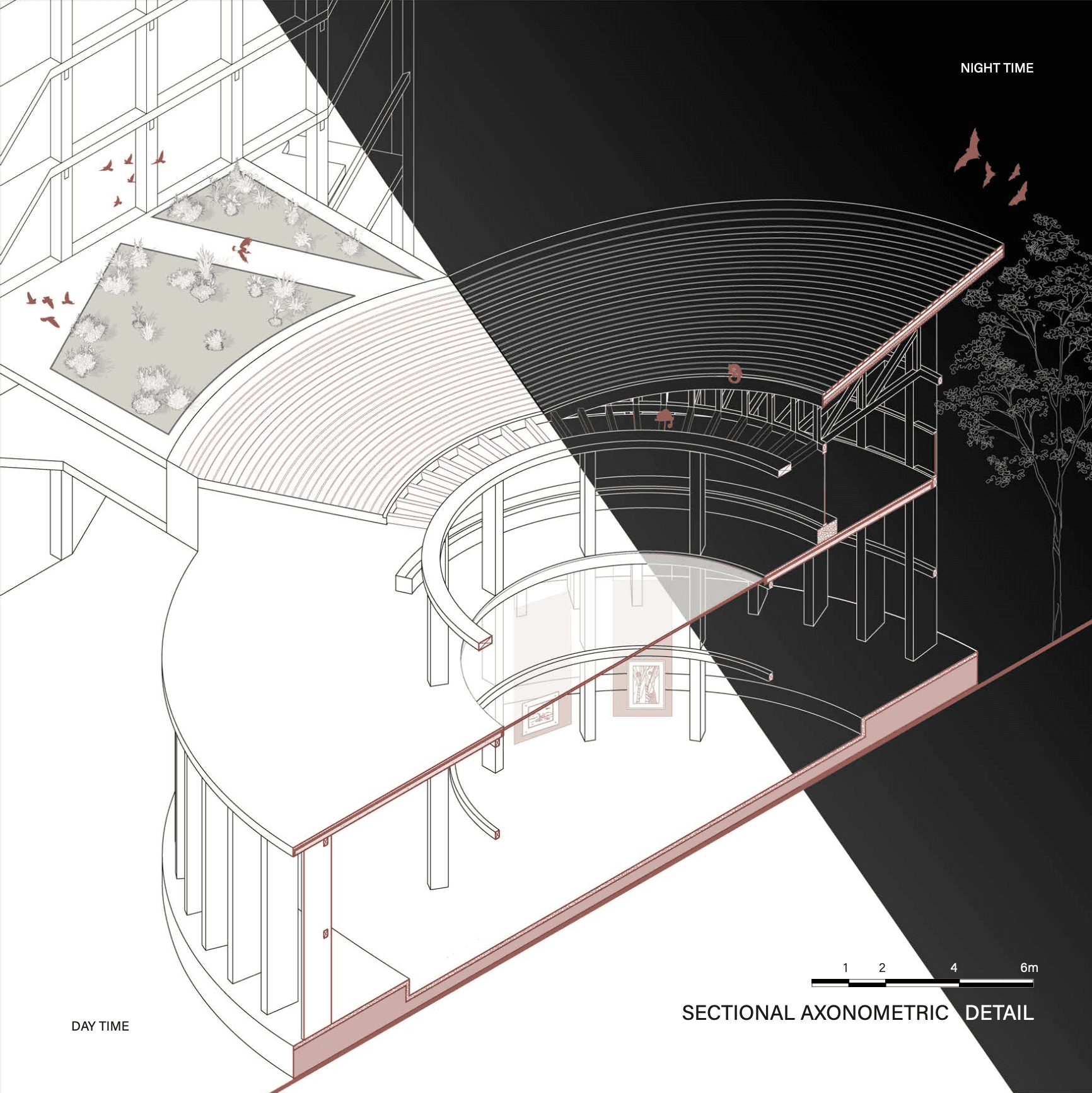
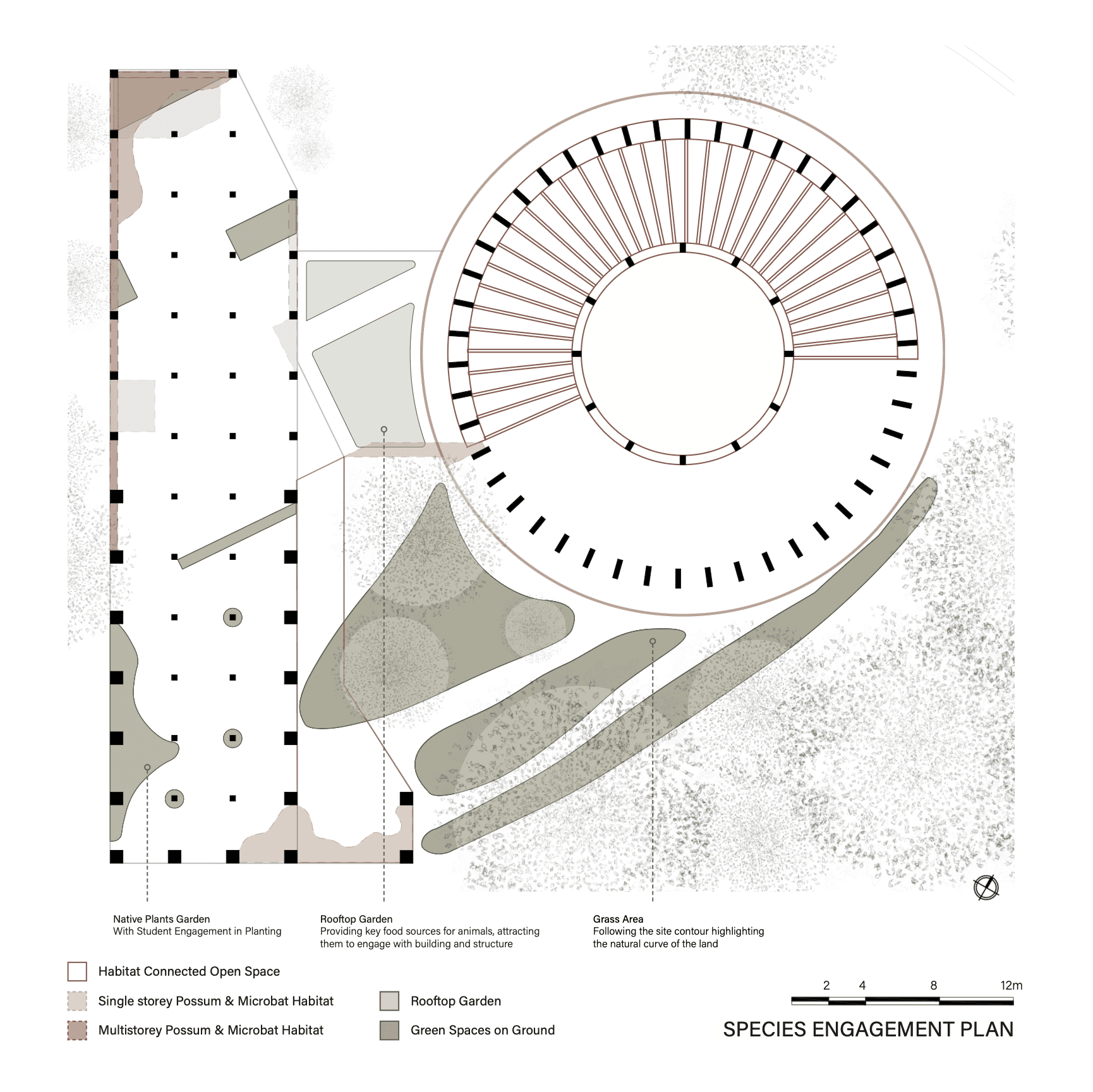
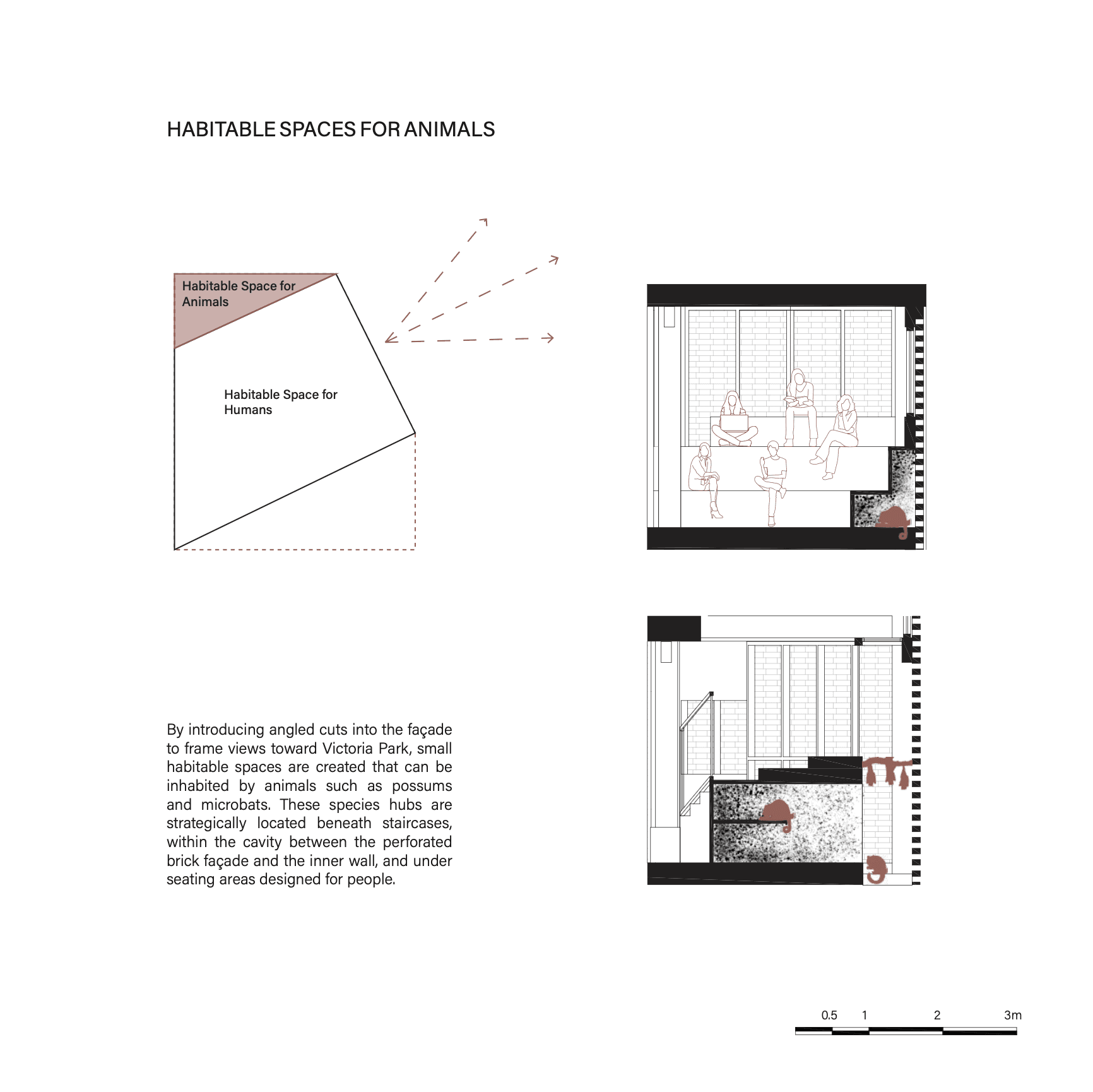
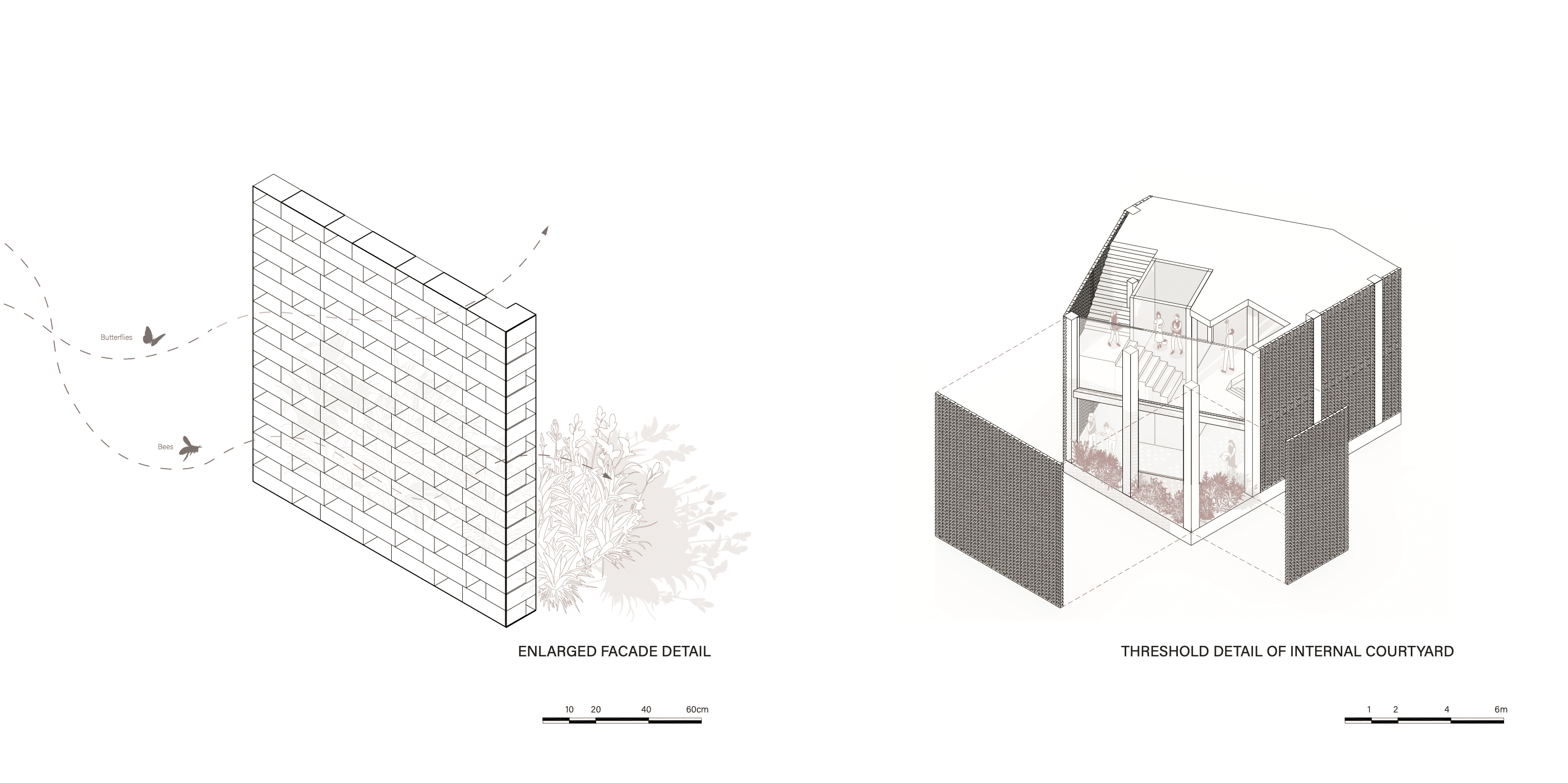
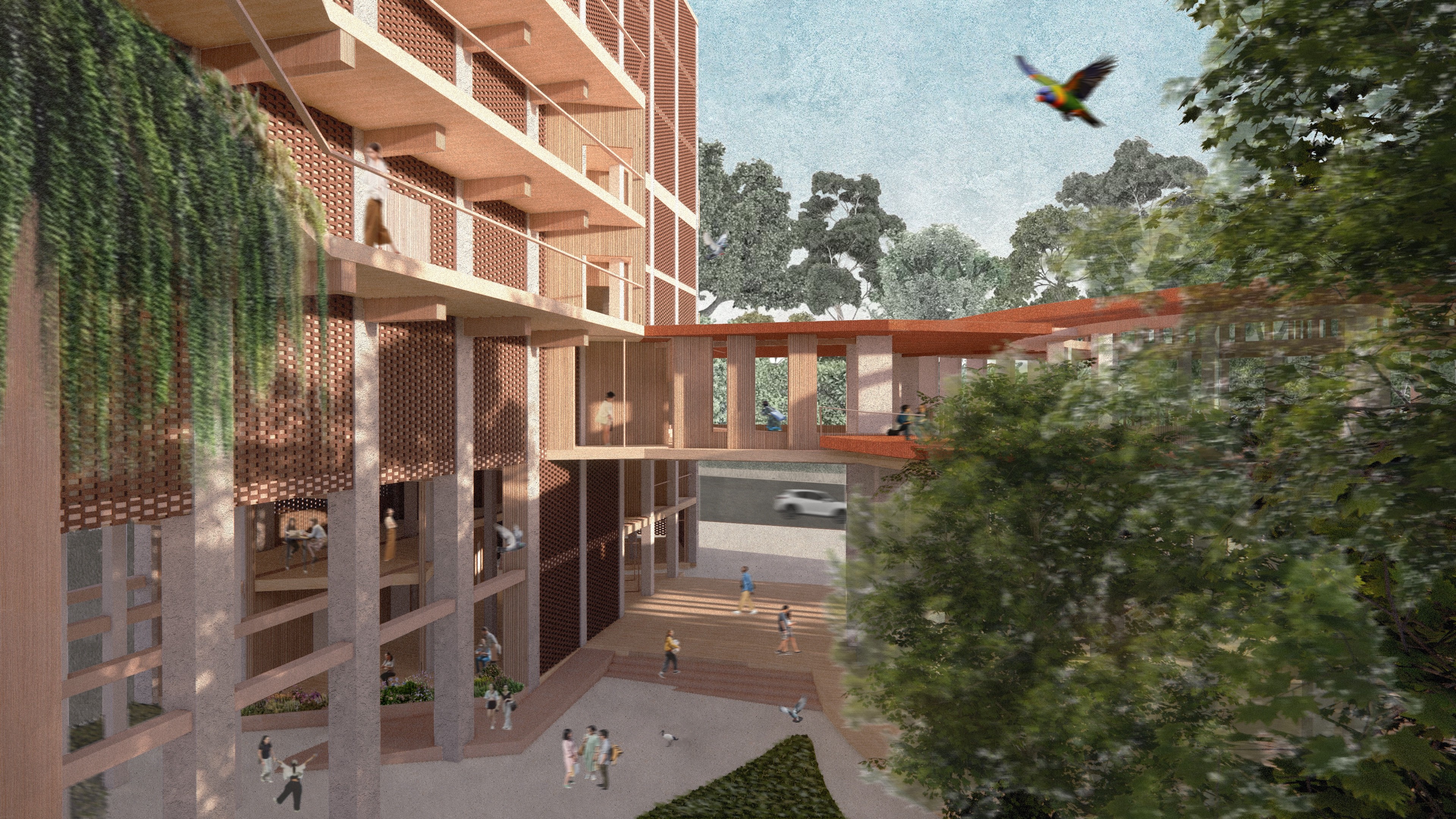
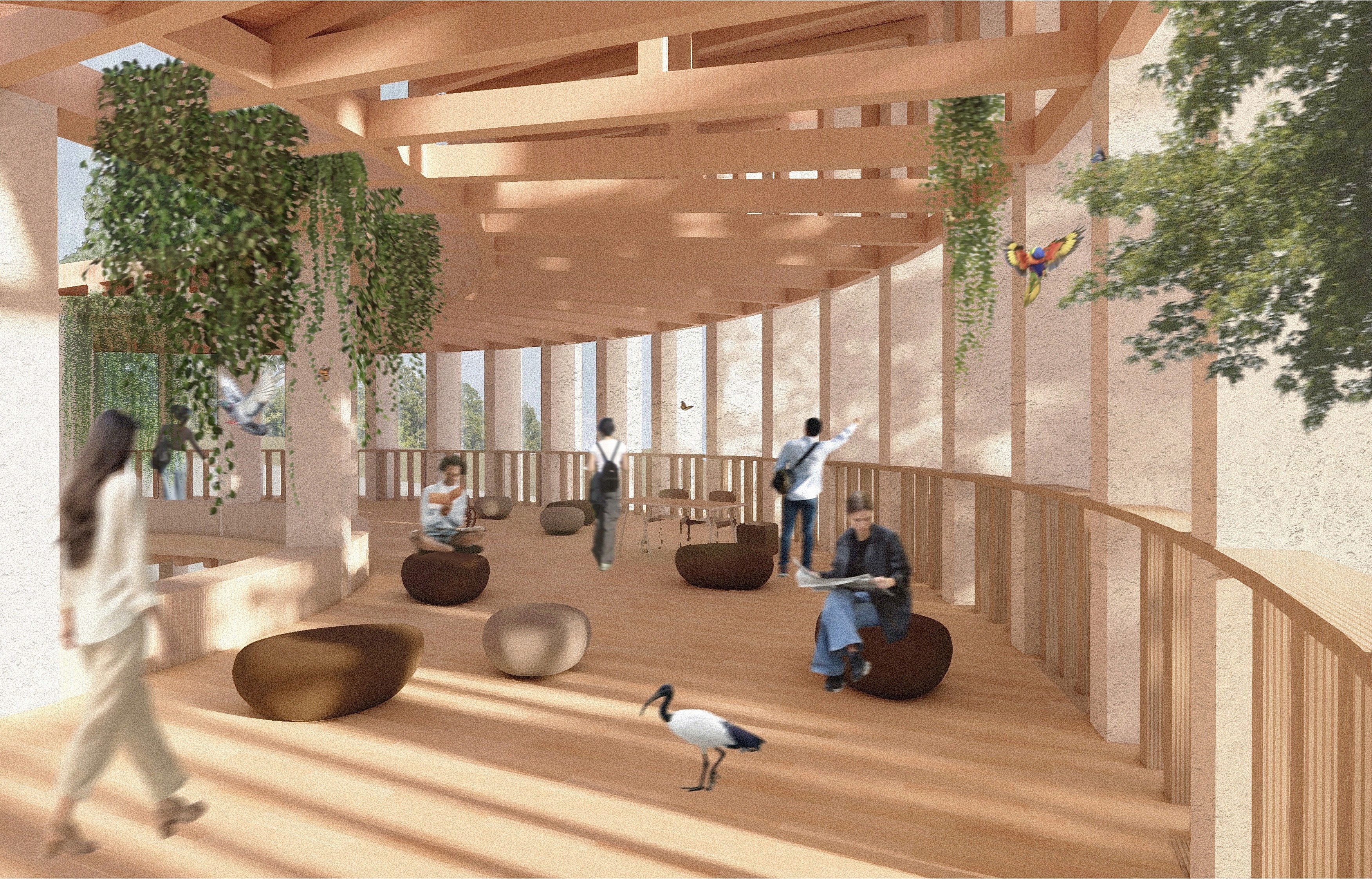
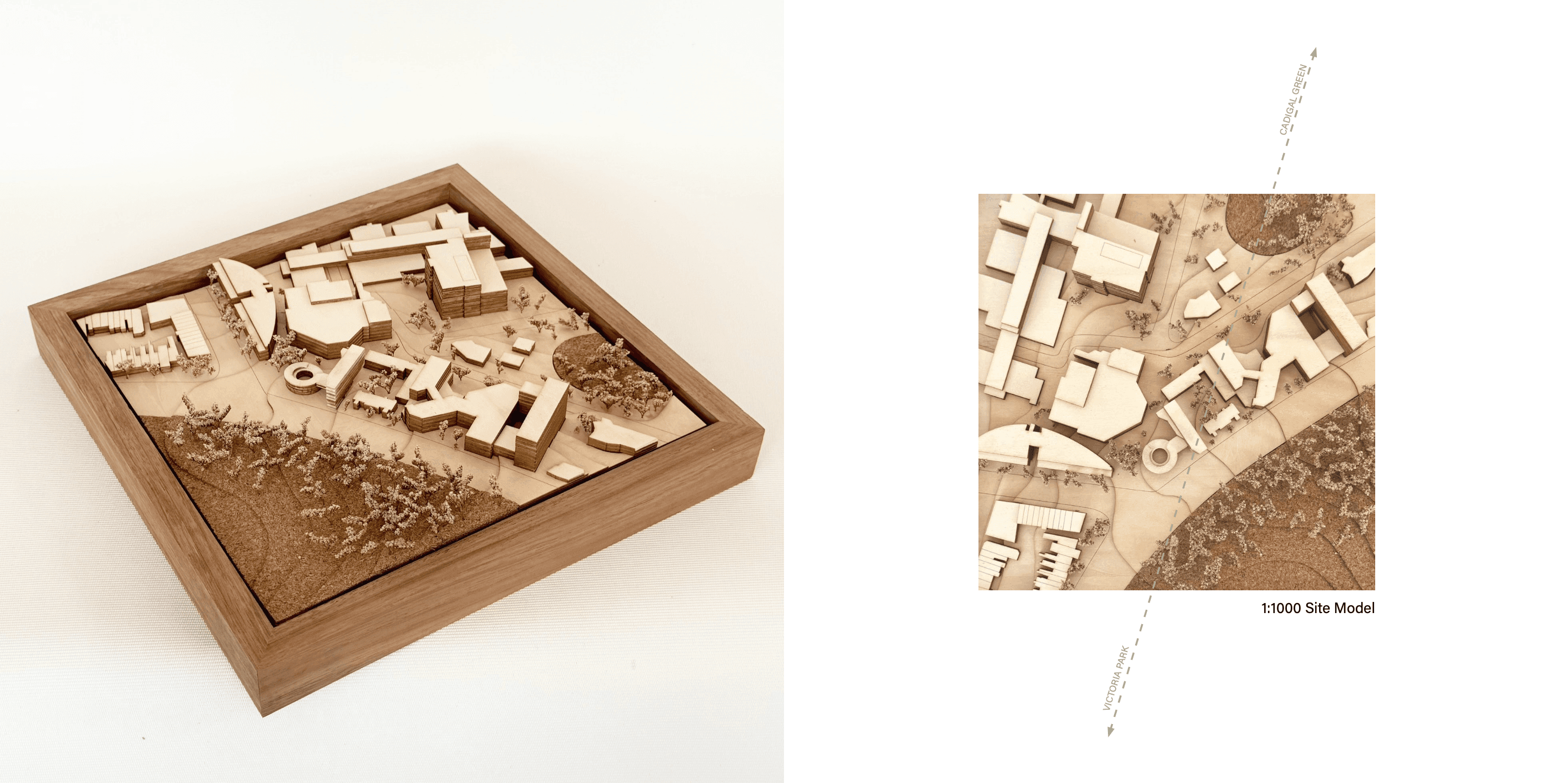
The Gadigal Centre of Excellence acts as the threads of coexistence by fundamentally reshaping the relationship between architecture and ecology. The design actively returns the ground to the earth, restoring the terrain and building a green corridor between Victoria Park and Cadigal Green. This living framework is not just for people. It is a shared habitat, consciously designed for native species such as possums and microbats to nest, forage, and travel. By weaving these essential species into the very fabric of the building, the Centre makes coexistence tangible. It transforms the site into a vibrant, shared territory, acknowledging humans, animals and the natural world as integral and inseparable.
Year
2025
Focus
Gadigal Centre of Excellence
Site
Camperdown, Sydney
/ Site Analysis
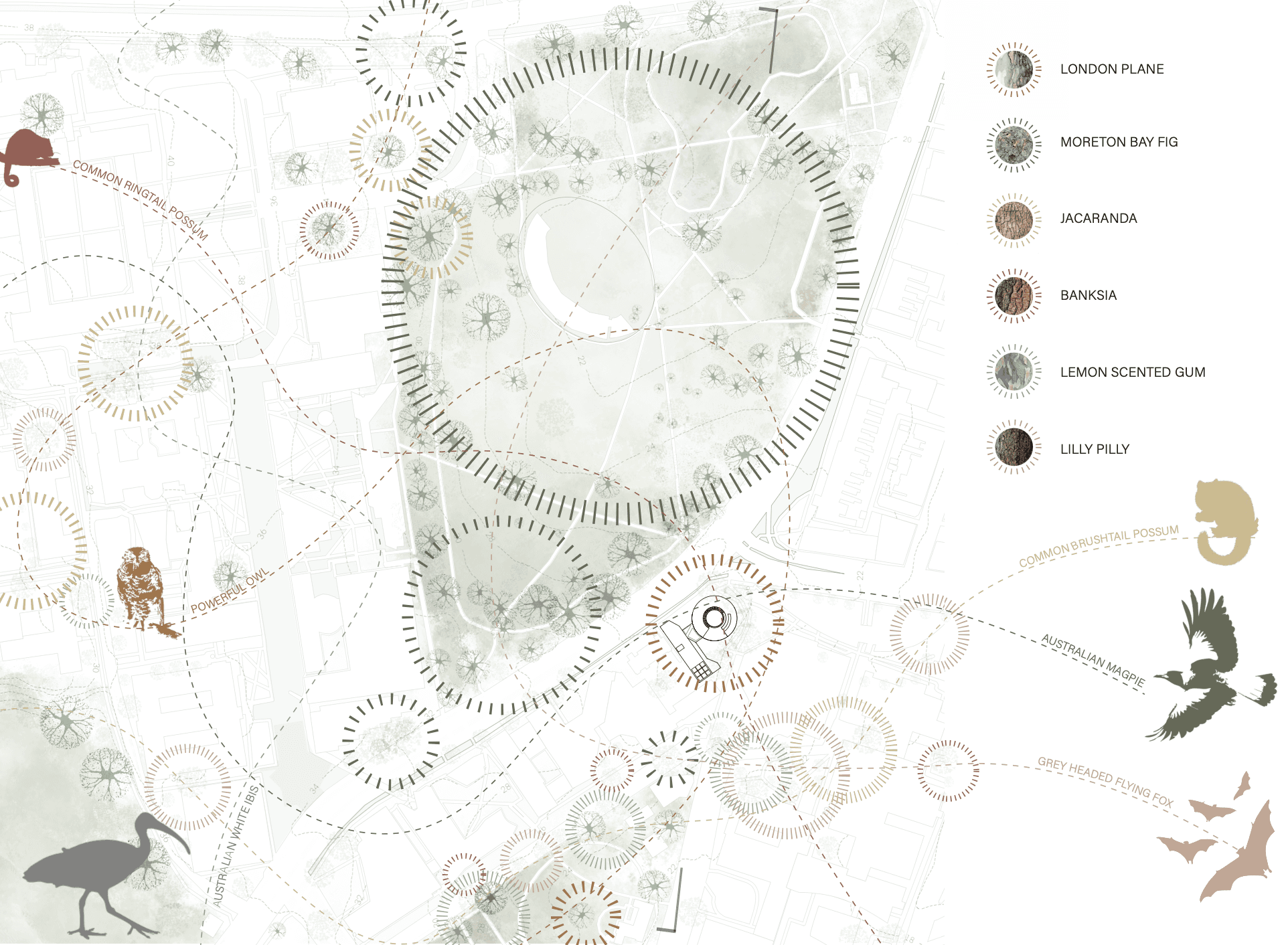
This mapping adopts a Country-centred approach, placing significant Australian native species at the heart of the analysis. It examines how these species travel and interact with the trees planted across the University of Sydney campus. The selected tree species were chosen for their large populations and their tendency to occur in dense clusters, which help reveal the campus’s major green corridors. Through this research, I also gained insight into how native animal species engage with these trees, and how they support the movement of wildlife across the campus.
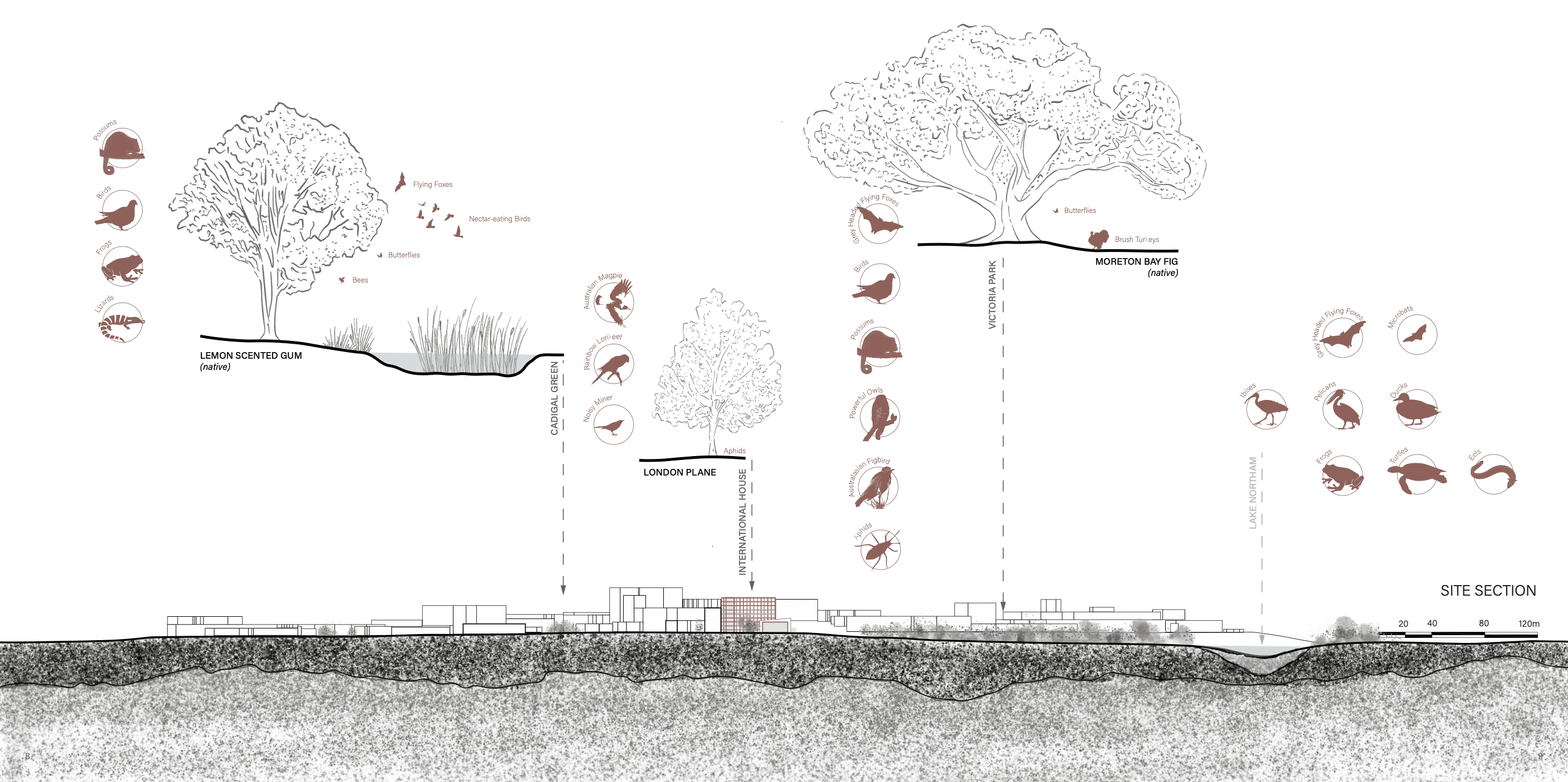
This section aims to identify the key green spaces surrounding International House by examining the tree species within each area. Through this analysis, I was able to distinguish which species inhabit these trees and which rely on them primarily as a food source.
/ The Design
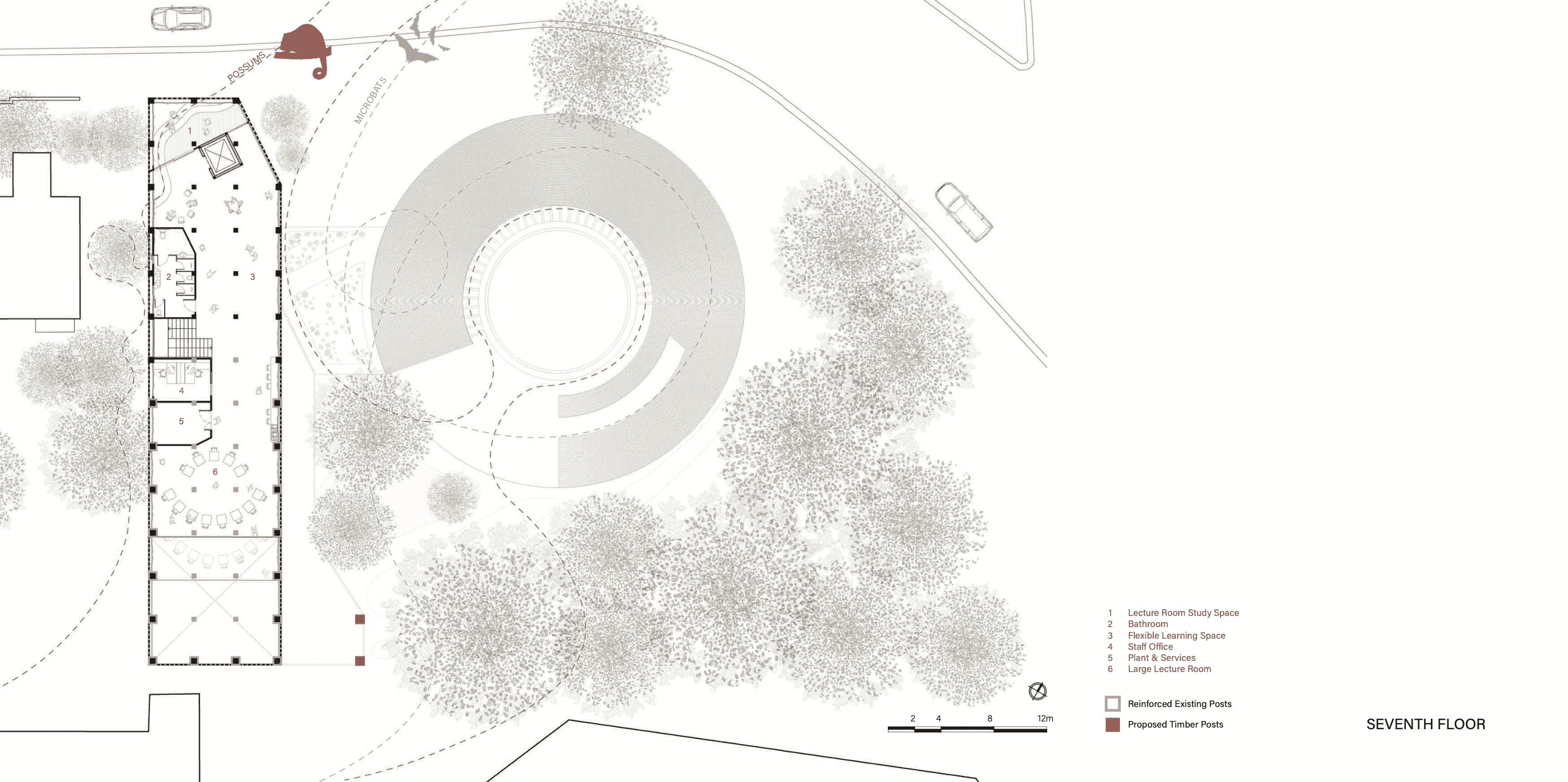
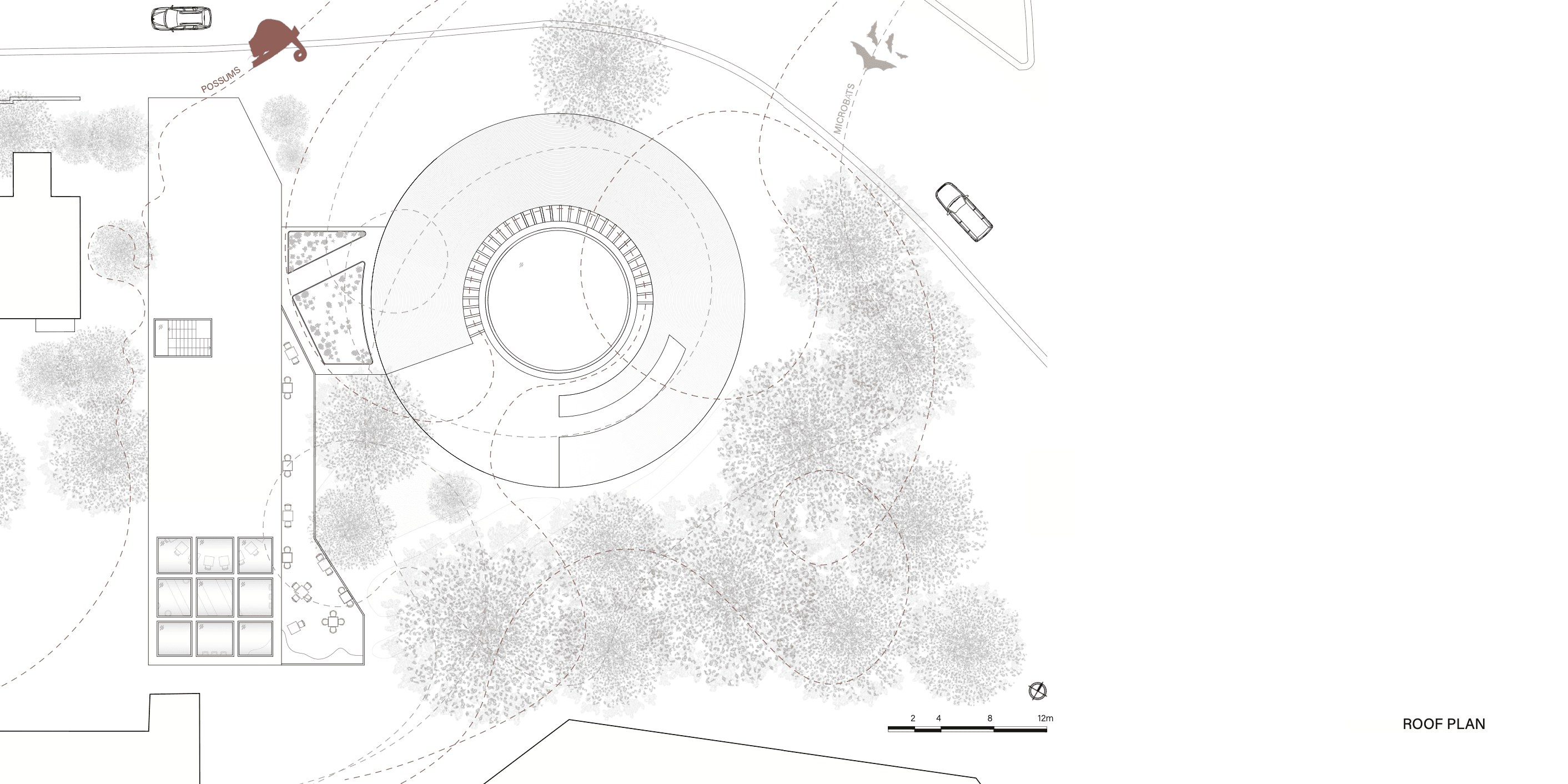
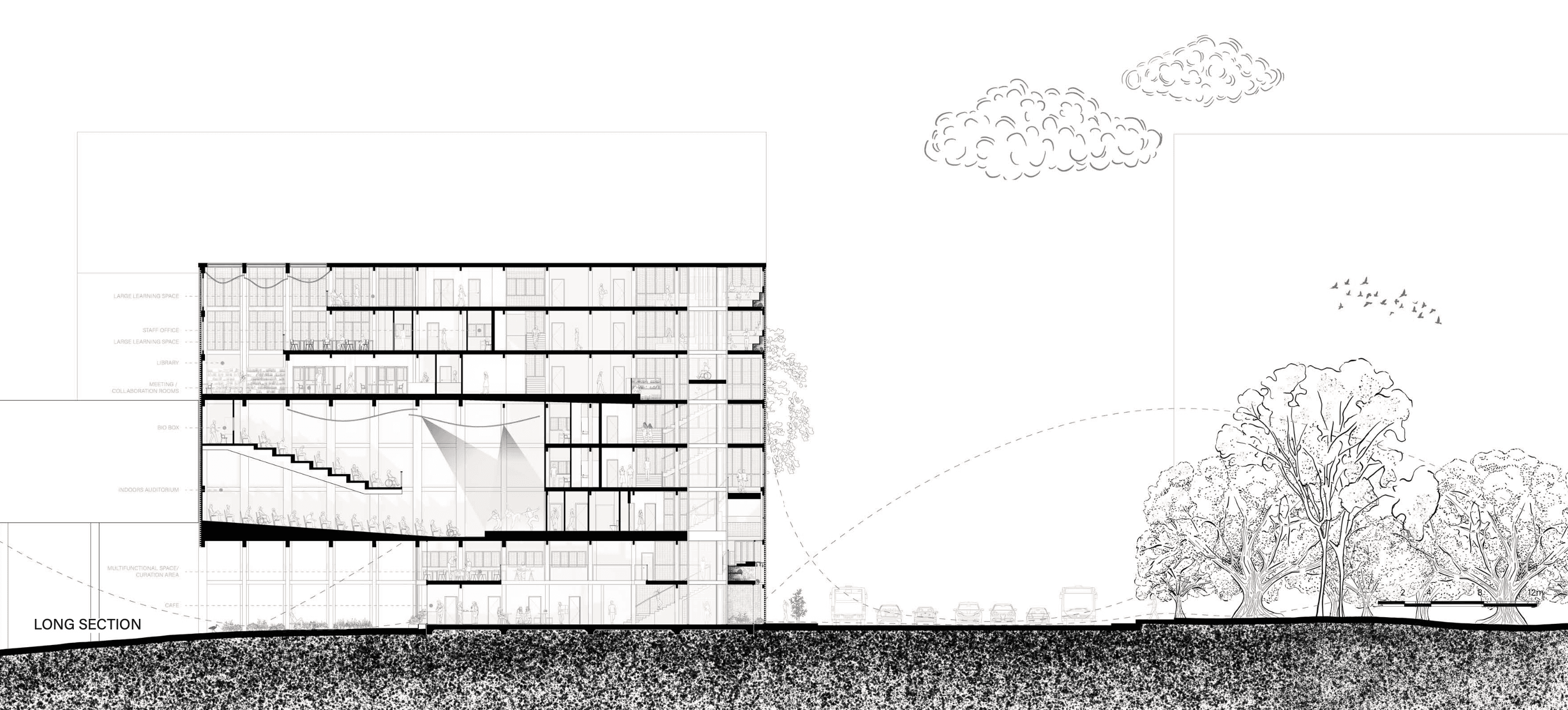
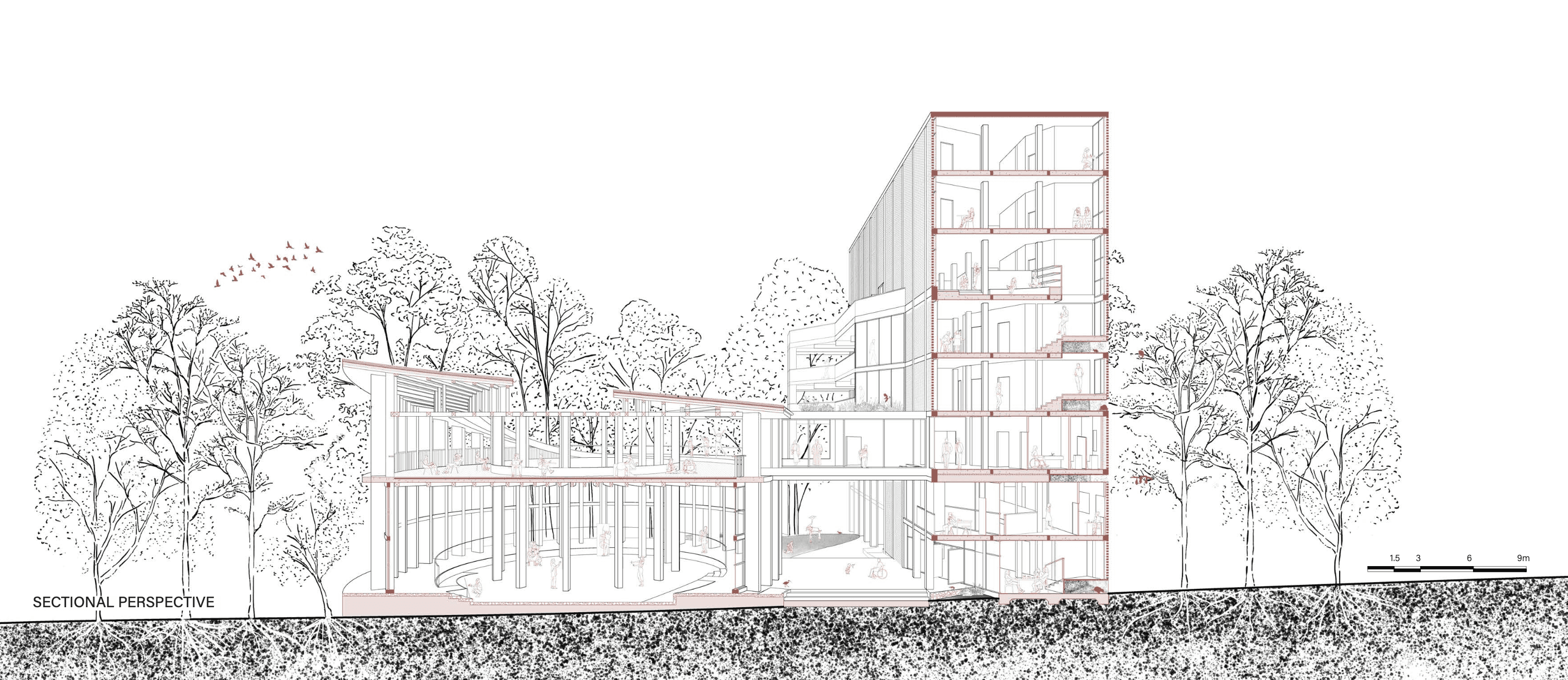
/ Visualisation & Model
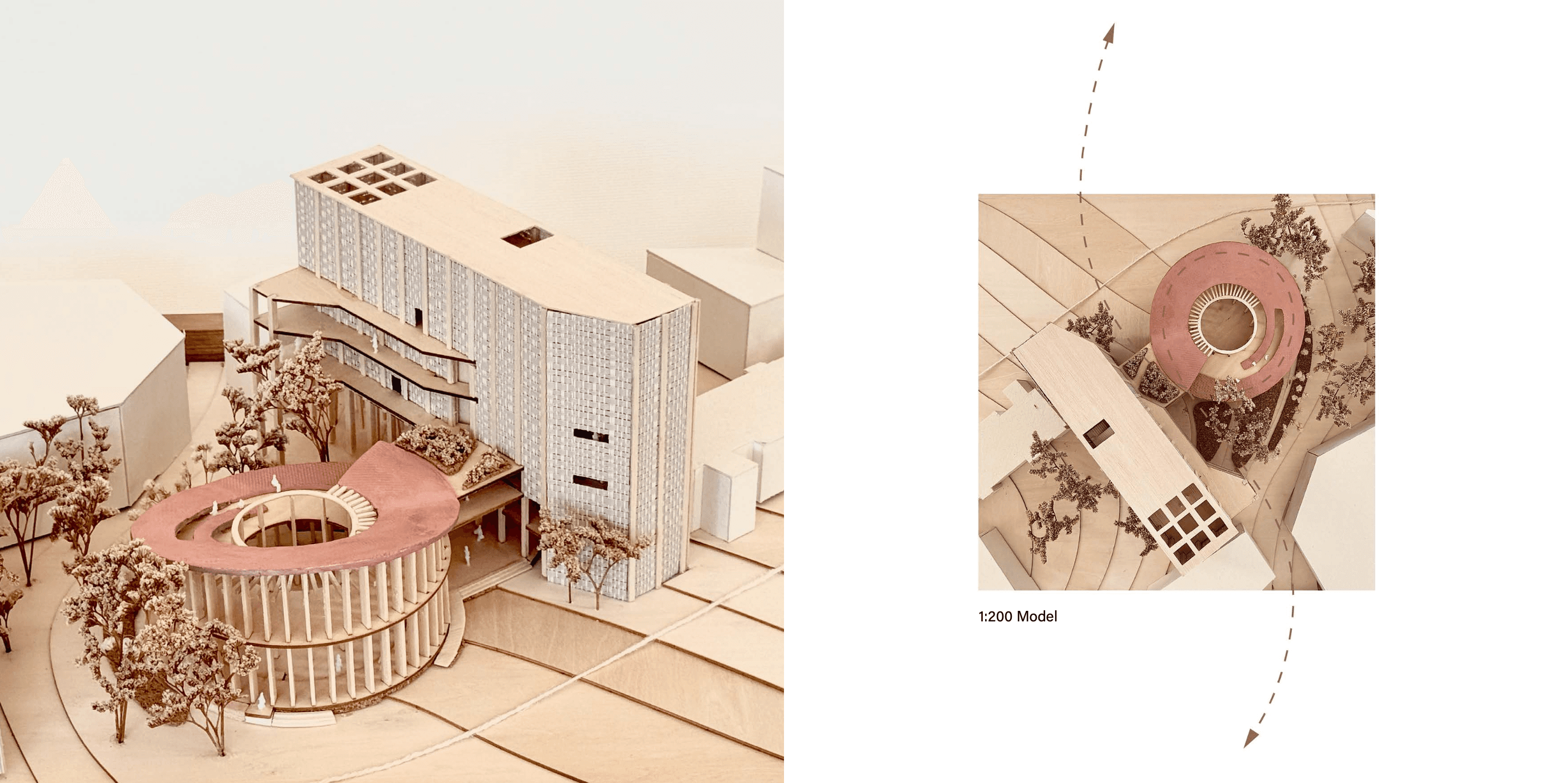
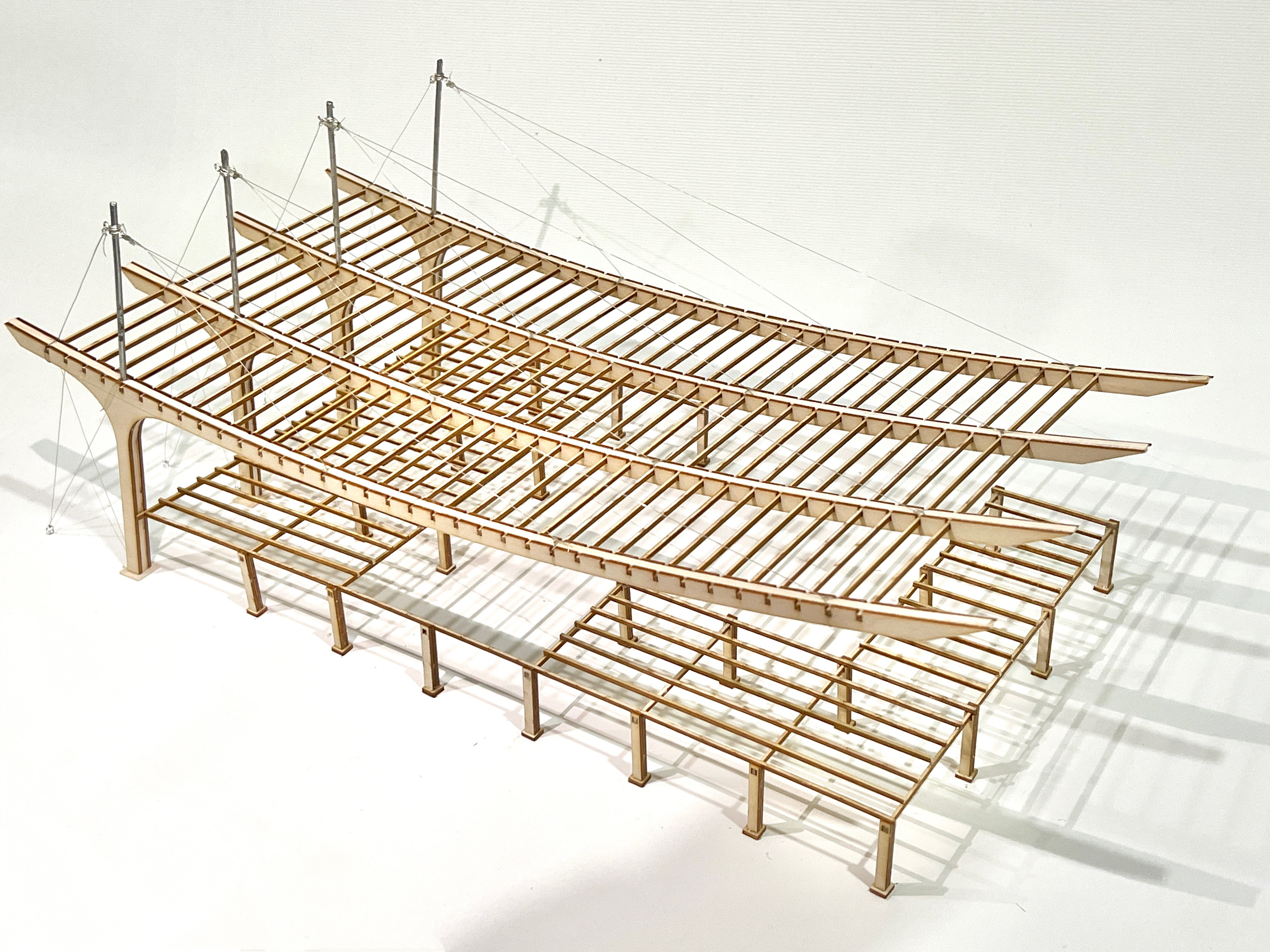
Threads of Coexistence
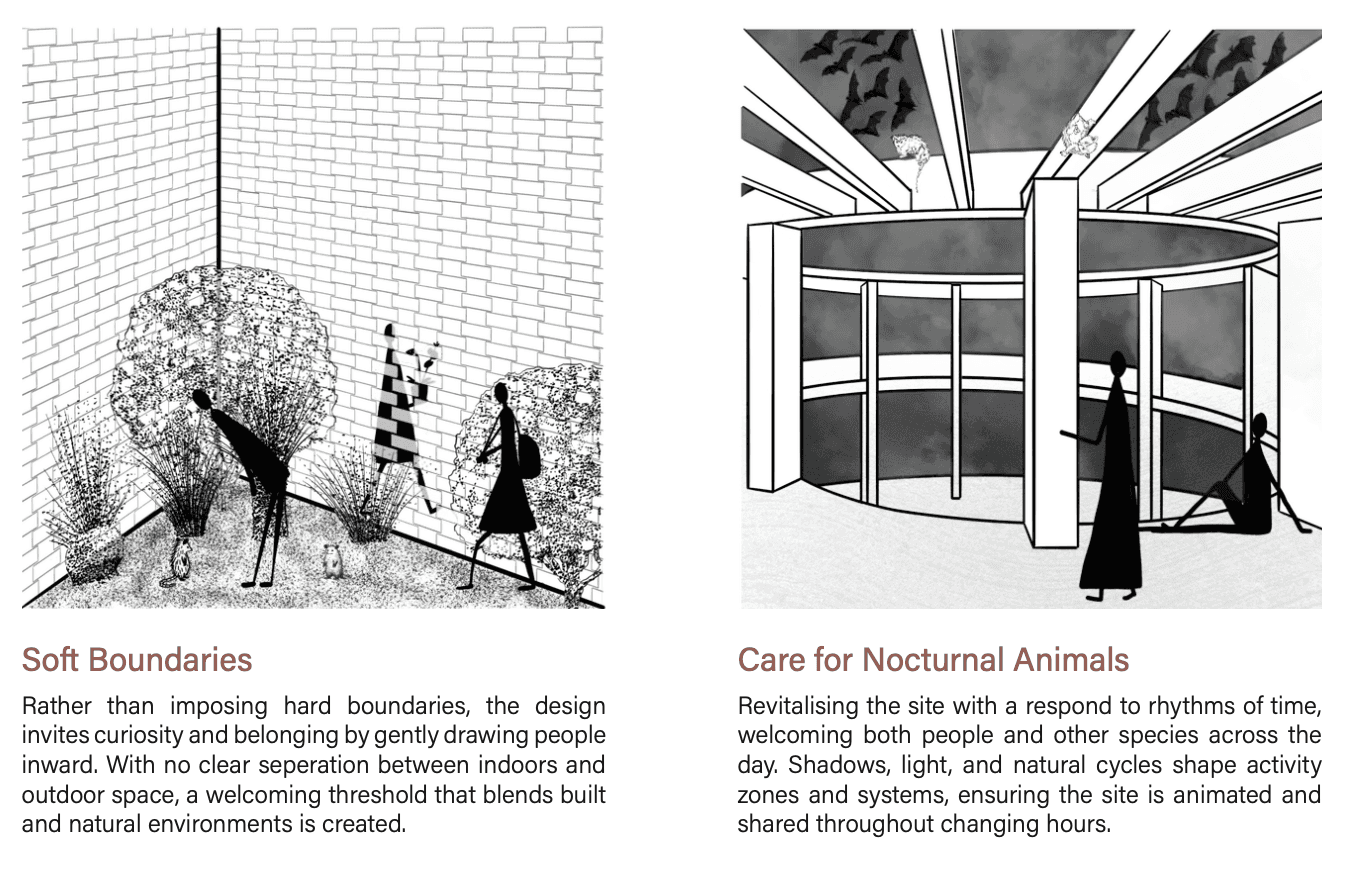
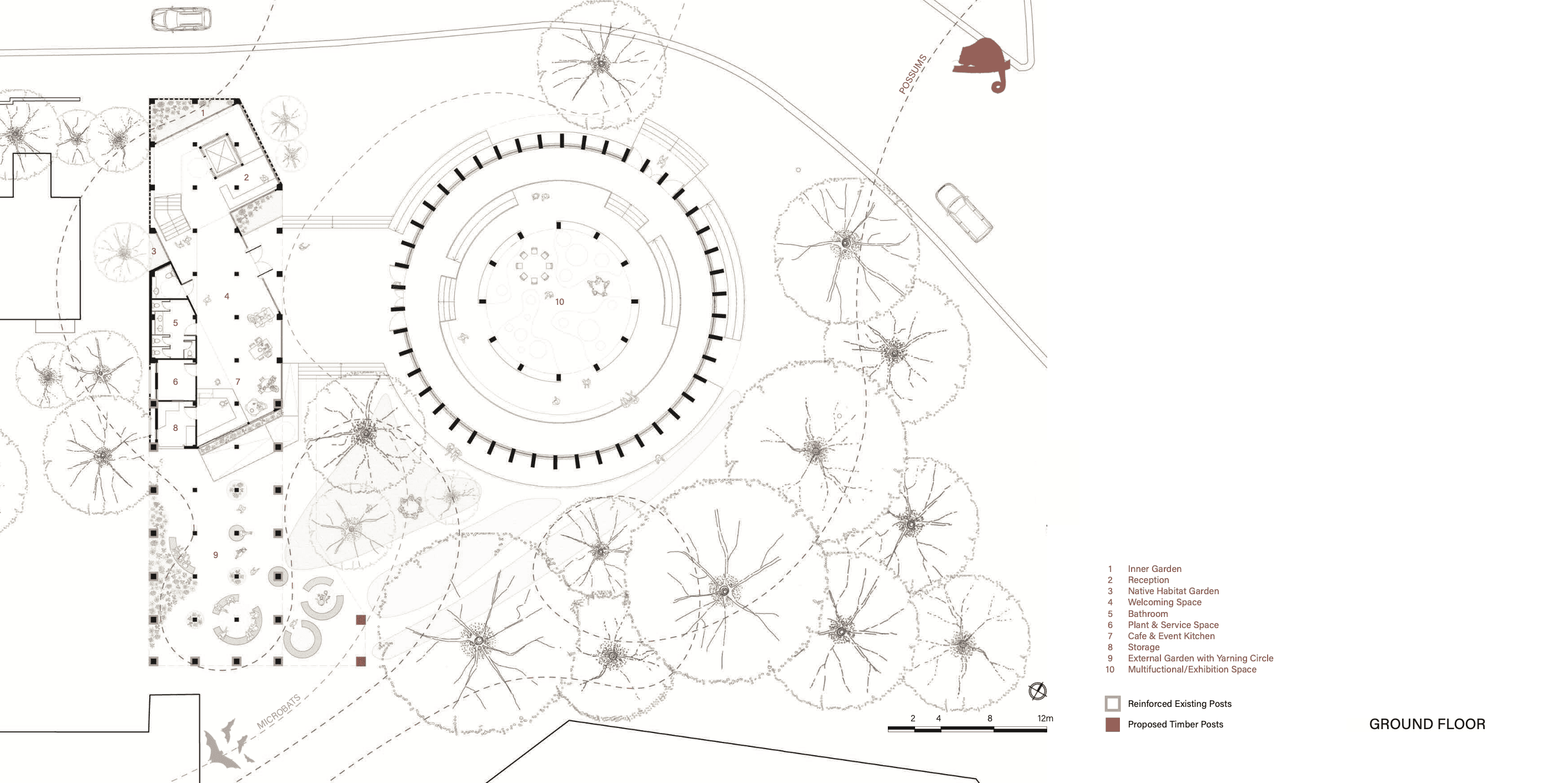
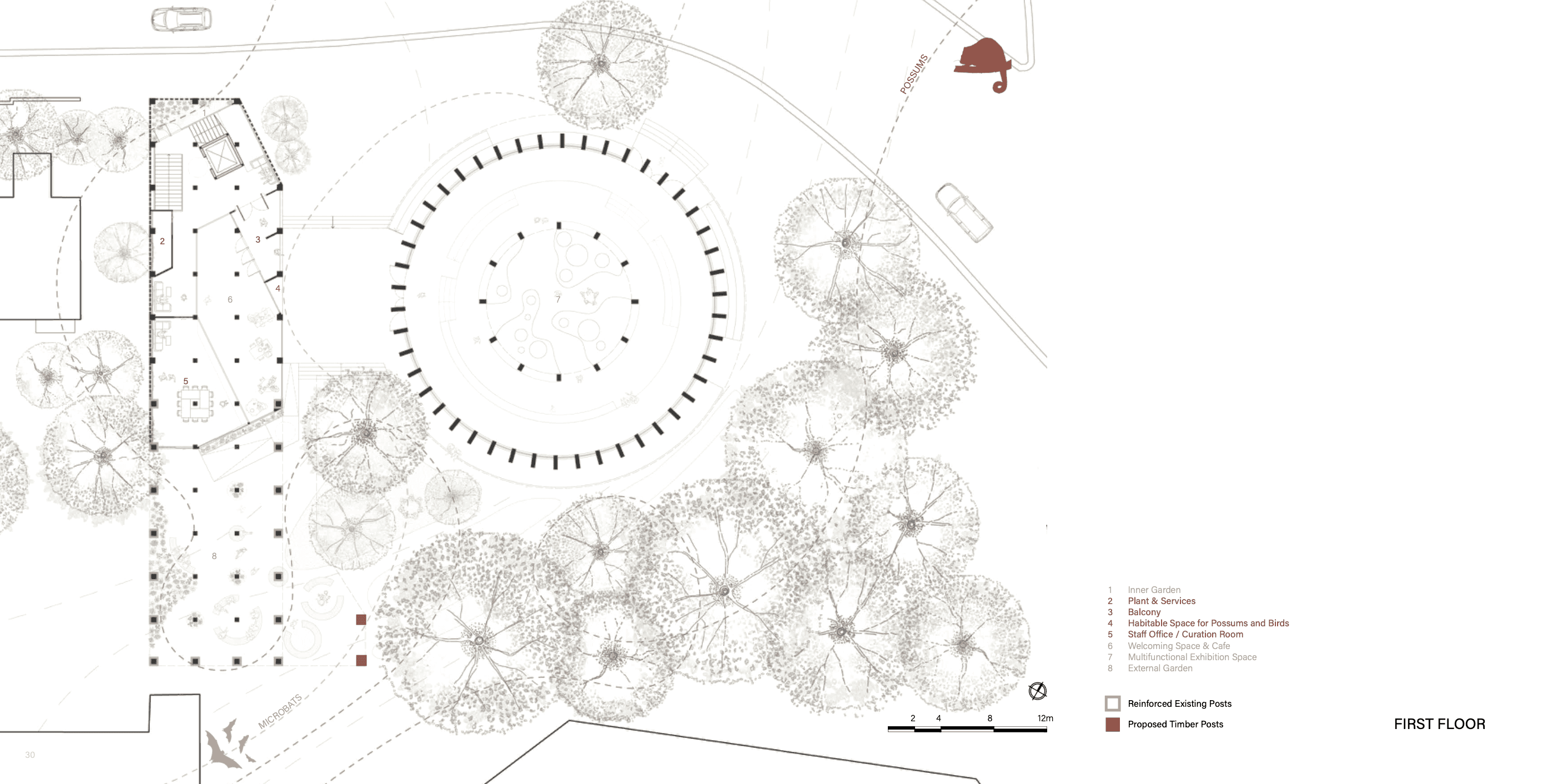
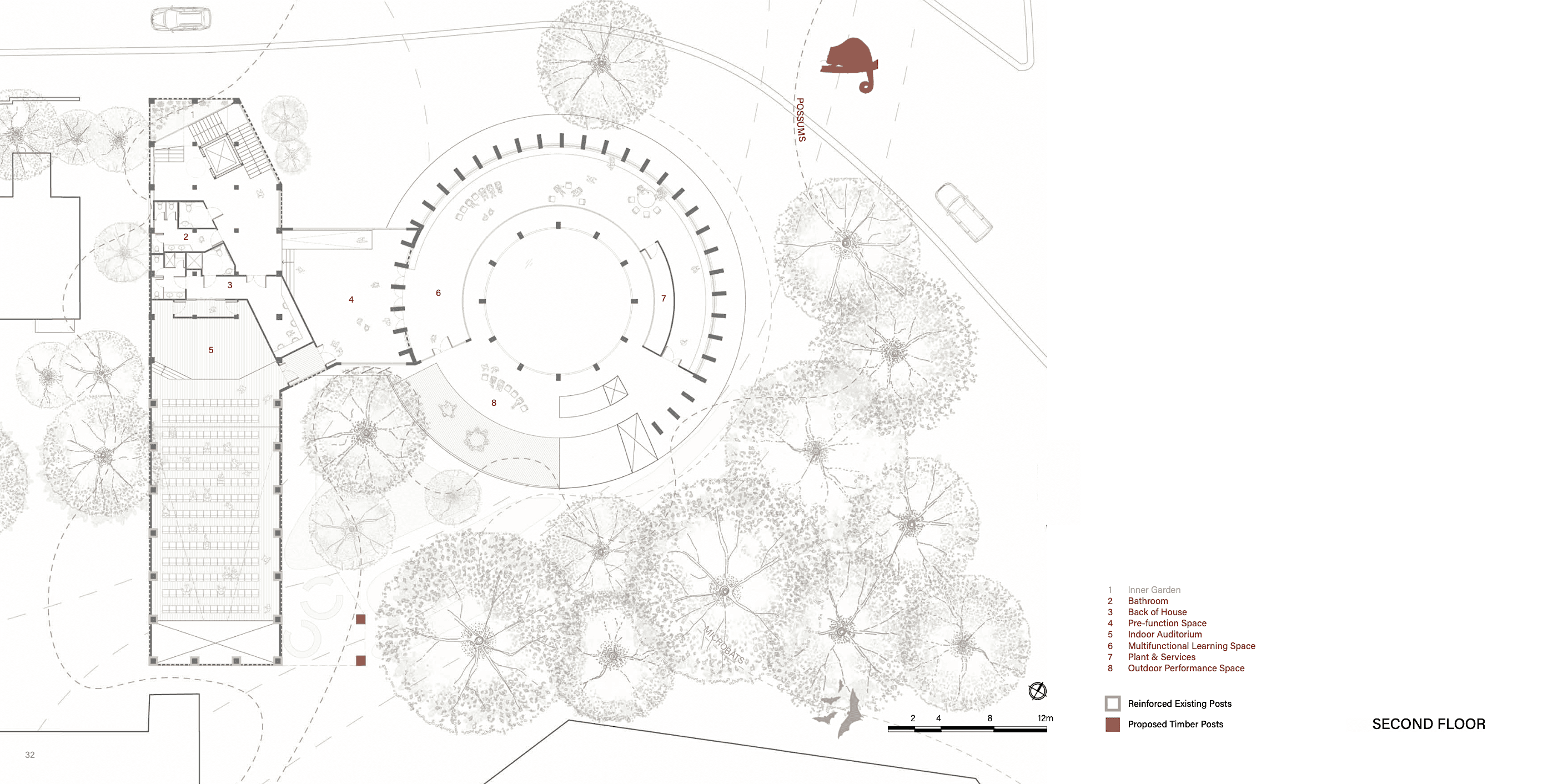
The Gadigal Centre of Excellence acts as the threads of coexistence by fundamentally reshaping the relationship between architecture and ecology. The design actively returns the ground to the earth, restoring the terrain and building a green corridor between Victoria Park and Cadigal Green. This living framework is not just for people. It is a shared habitat, consciously designed for native species such as possums and microbats to nest, forage, and travel. By weaving these essential species into the very fabric of the building, the Centre makes coexistence tangible. It transforms the site into a vibrant, shared territory, acknowledging humans, animals and the natural world as integral and inseparable.
Year
2025
Focus
Gadigal Centre of Excellence
Site
Camperdown, Sydney
/ Site Analysis
This mapping adopts a Country-centred approach, placing significant Australian native species at the heart of the analysis. It examines how these species travel and interact with the trees planted across the University of Sydney campus. The selected tree species were chosen for their large populations and their tendency to occur in dense clusters, which help reveal the campus’s major green corridors. Through this research, I also gained insight into how native animal species engage with these trees, and how they support the movement of wildlife across the campus.
This section aims to identify the key green spaces surrounding International House by examining the tree species within each area. Through this analysis, I was able to distinguish which species inhabit these trees and which rely on them primarily as a food source.
/ The Design
/ Visualisation & Model
Threads of Coexistence
The Gadigal Centre of Excellence acts as the threads of coexistence by fundamentally reshaping the relationship between architecture and ecology. The design actively returns the ground to the earth, restoring the terrain and building a green corridor between Victoria Park and Cadigal Green. This living framework is not just for people. It is a shared habitat, consciously designed for native species such as possums and microbats to nest, forage, and travel. By weaving these essential species into the very fabric of the building, the Centre makes coexistence tangible. It transforms the site into a vibrant, shared territory, acknowledging humans, animals and the natural world as integral and inseparable.
Year
2025
Focus
Gadigal Centre of Excellence
Site
Camperdown, Sydney
/ Site Analysis
This mapping adopts a Country-centred approach, placing significant Australian native species at the heart of the analysis. It examines how these species travel and interact with the trees planted across the University of Sydney campus. The selected tree species were chosen for their large populations and their tendency to occur in dense clusters, which help reveal the campus’s major green corridors. Through this research, I also gained insight into how native animal species engage with these trees, and how they support the movement of wildlife across the campus.
This section aims to identify the key green spaces surrounding International House by examining the tree species within each area. Through this analysis, I was able to distinguish which species inhabit these trees and which rely on them primarily as a food source.
/ The Design
/ Visualisation & Model